



Filed under: Uncategorized | Leave a comment »
Do Not Be Afraid
Posted on October 4, 2023 by bfhu
Miracle of the Scarlet Cord
Posted on April 10, 2023 by bfhu

Was Jesus Born on December 25th?
Posted on December 20, 2019 by bfhu
Q. Was Jesus really born on December 25th? I have heard he was born in the spring.
A. ARGUMENT FOR DECEMBER BIRTHDATE OF JESUS
I believe that we do celebrate the birth of Jesus Christ on the right day or very close to it. This is not mandatory dogma or a matter of faith, but why doubt it without a very good reason and without sound historical evidence?
MARY
Mary knew when Jesus was born. And she would have passed on this information to His disciples and lots of other people. For the Church, His birth signified the INCARNATION OF GOD INTO HUMAN FLESH and therefore, was extremely important. Everyone would have wanted to know His birthday. If it had turned out that the Church authorities really did not know when He was born, they might have chosen a random date or one to supplant a pagan holiday. But there is no evidence of this. However, there is very early evidence that late December was when He was born.
Zechariah
The rotation system, in New Testament times, for Levitical priests to serve at the Jerusalem Temple, has been worked out by the Israeli scholar Shemaryahu Talmon. There is no shadow of doubt about the order of this system. John the Baptist was from the family of Abijah. So his father, Zechariah was required to officiate twice a year. And the latter period of service for his family, was late September. For this reason John’s conception was celebrated on September 23 in very early Church calendars and his birth on June 24, nine months later.
Since, at the Annunciation, Mary was told that Elizabeth was six months pregnant, that would place the conception of Jesus at around March 25 and nine months later is December 25th would be His birthday!
We cannot prove Zehcarias was visited by the Angel in September but it is a very real possibility and goes hand in glove with the historical dates of John’s conception and birth and Jesus’ conception and birth on Decembeer 25 th. Therefore, if Zacharias served during the end of September and Elizabeth conceived shortly thereafter, we can place the date of Jesus’ birth during the month of Tevet, in late December.
To recap:
1. Jesus’ cousin, John the Baptist, was conceived just after Yom Kippur (late Sept) and born 9 months later in (late June).
2. If John was conceved around September 23, Jesus would have been conceived in (late March), six months after John the Baptist (Luke 1:24-27, 36) near Passover, and born 9 months later during late December.
Luke 1:36 Even Elizabeth your relative is going to have a child in her old age, and she who was said to be barren is in her sixth month.
3. Circumstantial Evidences:
Church history, since the time of the late first century, has attested to a late December birth.
Hippolytus, in the second century AD, argued that this was Christ’s birthday.
In the fourth century,
John Chrysostom (347-407) argued that December 25th was the correct date. Chrysostom taught that Zechariah received the message about John’s birth on the Day of Atonement and John the Baptist was born sometime in June or July, and the birth of Jesus took place six months later, in late December (or early January). There was never a question about the period of Jesus’ birth either in the East or in the West; only in the recent years this date was challenged.
OBJECTION: “But the sheep would not have been out in the winter….”
RESPONSE: Early Jewish sources suggest that the sheep around Bethlehem were outside year-round. In the normal traffic of shepherds they move around and come near Bethlehem from November to March of the year. But then these may very well have been the special class of Levitical shepherds who kept the sacrificial lambs. They do not move around, because they supply the lambs for daily sacrifice from whom people bought their approved lambs, which are without blemishes. The climate near Bethlehem is more like Southern California, it is after all Mediterranian. It is not a Canadian or Russian climate. Nevertheless, In England sheep are kept outside in the snow. It ensures very good thick wool.

Filed under: Uncategorized | Leave a comment »
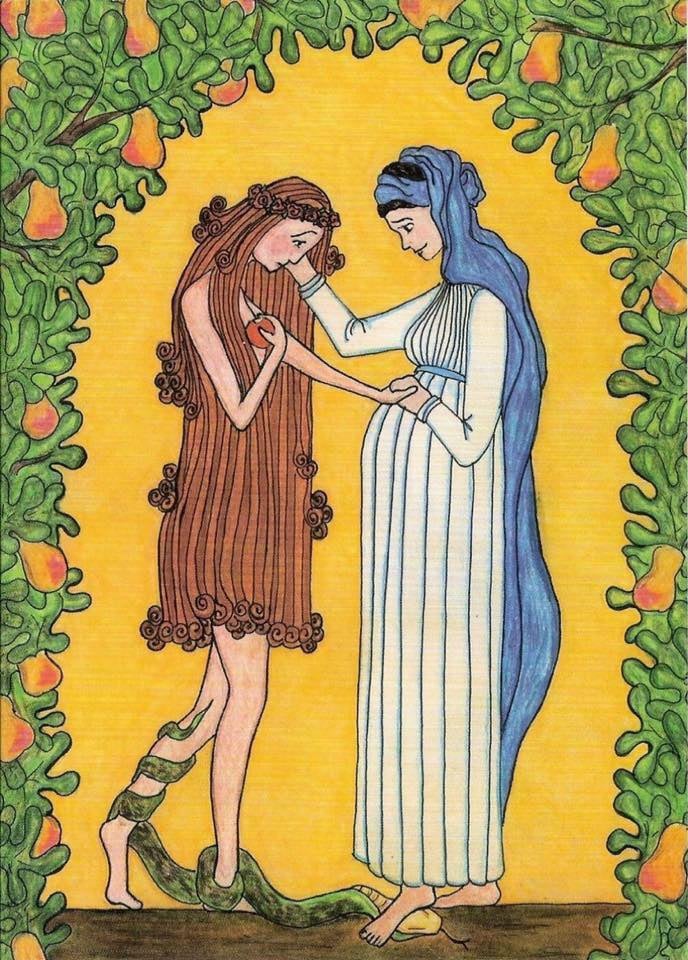
Mary Unties the Knot of Sin Eve Created
Posted on December 12, 2019 by bfhu
Immaculate Conception:December 8th
Posted on December 9, 2019 by bfhu

 Q. Where in Scripture does it teach the Immaculate Conception of Mary?
A. The Doctrine of the Immaculate Conception is not clearly taught in Scripture in a way that would satisfy a skeptic. But, to be honest, neither is the Doctrine of the Trinity. I know, because I spent hours trying to discover it, in order to show a friend who was a Jehovah’s Witness.
What we do find in Scripture are oblique comments that only make sense if the underlying doctrine that gave rise to the comments are known.
For instance, Jesus instructs his disciples to baptize in the name of the Father, the Son and the Holy Spirit in Matthew 28. This verse is cited when arguing for the Trinity. But does it unequivocally teach the Doctrine of the Trinity? No. But if you can understand that this verse rests upon and takes for granted that the listeners…
View original post 625 more words
Filed under: Uncategorized | Leave a comment »
Atheist Harvard Professor’s Conversion
Posted on December 8, 2019 by bfhu
Hope Springs Eternal
Posted on June 13, 2019 by bfhu

Was Jesus Born December 25th?
Posted on December 12, 2018 by bfhu
I like to post this every Christmas. It is not dogma of course but makes sense that the Catholic Church would not celebrate the birth of Christ, THE INCARNATION, one of the most important events in history on some random day or purely to supplant a pagan celebration.
Q. Was Jesus really born on December 25th? I have heard he was born in the spring.
A. ARGUMENT FOR DECEMBER BIRTHDATE OF JESUS
God has allowed His Church to celebrate the birth of Jesus Christ on the right day or very close to it. This is not mandatory or a matter of faith, but why doubt it without a very good reason?
The argument for assigning late December as the rightful date of the birth of Yeshua is based on the time Zacharias was told that Elizabeth would conceive a child.
Osservatore Romano: December 24,1998
“December 25 is an historical date,” Professor Tommaso Federici, Professor at the Pontifical Urbanian University and a consultant to two Vatican Congregations, has stressed. In an article in the Osservatore Romano on December 24, he wrote: “December 25 is explained as the ‘Christianization’ of a pagan feast, ‘birth of the Sol Invictus’; or as the symmetrical balance, an aesthetic balance between the winter solstice (Dec. 21-22) and the spring equinox (March 23-24).
But a discovery of recent years has shed definitive light on the date of the Lord’s birth. As long ago as 1958, the Israeli scholar Shemaryahu Talmon published an in-depth study on the calendar of the Qumran sect [Ed. based , in part, on Parchment Number 321 — 4 Q 321 — of the Qumran Dead Sea Scrolls,], and he reconstructed without the shadow of doubt the order of the sacerdotal rota system for the temple of Jerusalem (1 Chronicles 24, 7-18) in New Testament times.
Here the family of Abijah, of which Zechariah was a descendant, father of John the herald and forerunner (Luke 1, 5), was required to officiate twice a year, on the days 8-14 of the third month, and on the days 24-30 of the eighth month. This latter period fell at about the end of September. It is not without reason that the Byzantine calendar celebrated ‘John’s conception’ on September 23 and his birth nine months later, on June 24. The ‘six months’ after the Annunciation established as a liturgical feast on March 25, comes three months before the forerunner’s birth, prelude to the nine months in December: December 25 is a date of history.”
Therefore, If Zacharias served during the end of September and Elizabeth conceived shortly thereafter, we can place the date of Jesus’ birth during the month of Tevet, in late December. The explanation is as follows:
1. Jesus’ cousin, John the Baptist, was conceived just after Yom Kippur (late Sept) and born 9 months later in (late June).* John’s father (Zacharias) was a Levite of the house of Abijah who was assigned to serve in the temple during the 8th and 34 weeks of the year. If the Angel’s announcement to Zechariah was the 34th week that would have been during the High Holiday of Yom Kippur.
* It is written that John was conceived shortly after this tour of duty (Luke 1:23-4), and Yom Kippur. Thus, John would have been born around (late June).2. Jesus was conceived in (late March), six months after John the Baptist (Luke 1:24-27, 36) near Passover, and born 9 months later during late December.
Luke 1:36 Even Elizabeth your relative is going to have a child in her old age, and she who was said to be barren is in her sixth month.
3. Circumstantial Evidences:
Church history, since the time of the late first century, has attested to a late December birth.
Hippolytus, in the second century AD, argued that this was Christ’s birthday.
In the fourth century,
John Chrysostom (347-407) argued that December 25th was the correct date. Chrysostom taught that Zechariah received the message about John’s birth on the Day of Atonement and John the Baptist was born sometime in June or July, and the birth of Jesus took place six months later, in late December (or early January). There was never a question about the period of Jesus’ birth either in the East or in the West; only in the recent years this date was challenged.
Early Jewish sources suggest that the sheep around Bethlehem were outside year-round. In the normal traffic of shepherds they move around and come near Bethlehem from November to March of the year. But then these were a special class of Levitical shepherds who kept the sacrificial lambs. They do not move around because they supply the lambs for daily sacrifice from whom people bought their approved lambs, which are blemishless. The fact that the Angels announced the arrival of the perfect sacrificial lamb to these shepherds indicates this. The climate near Bethlehem is more like Southern California, it is after all Mediterranian. It is not a Canadian or Russian climate.Alfred Edersheim, a Messianic Jew, wrote, “There is no adequate reason for questioning the historical accuracy of this date. The objections generally made rest on grounds which seem to me historically untenable.”
Edersheim notes that Megillot Taanit states that the 9th of Tevet is considered the day of Christ’s birth, and that puts the birth of Yeshua sometime during late December.
Summary:
If Zacharias served during Yom Kippur and Elizabeth conceived shortly thereafter, we can place the date of Jesus’ birth during the month of Tevet, in late December.Both views can be seen HERE
 Q. Was Jesus really born on December 25th? I have heard he was born in the spring.
A. ARGUMENT FOR DECEMBER BIRTHDATE OF JESUS
God has allowed His Church to celebrate the birth of Jesus Christ on the right day or very close to it. This is not mandatory or a matter of faith, but why doubt it without very good reason?
The argument for assigning late December as the rightful date of the birth of Yeshua is based on the time Zacharias was told that Elizabeth would conceive a child.
Osservatore Romano: December 24,1998
“December 25 is an historical date,” Professor Tommaso Federici, Professor at the Pontifical Urbanian University and a consultant to two Vatican Congregations, has stressed. In an article in the Osservatore Romano on December 24, he wrote: “December 25 is explained as the ‘Christianization’ of a pagan feast, ‘birth of the Sol Invictus’; or as the…
View original post 729 more words
Filed under: Uncategorized | Leave a comment »
Matt Fradd read the 2nd Vigano letter.
Posted on October 12, 2018 by bfhu
St. Gallen Mafia & Pope Francis: What is it?
Posted on October 11, 2018 by bfhu


 Bread From Heaven